FASD-CAN is delighted to be part of a significant new initiative that will improve access to FASD assessment, diagnosis and support in Aotearoa.
Media coverage
• Read it in the Hawkes Bay Today.
• Read it in the Rotorua Daily Post.
• Read about it on the Radio 1XX Whakatāne website: 1XX News.
• Read about it on Waatea News.
 At a launch event in Gisborne on Thursday July 10, Health Minister Matt Doocey (pictured with our CEO Stephanie James-Sadler) announced a $9 million investment over three years to establish New Zealand's first dedicated community-based FASD assessment, diagnosis and support services.
For years FASD-CAN has been advocating for better access to FASD services, and this new investment is an important step towards making that a reality.
The initiative delivers on key commitments in the FASD Action Plan 2025–2028 – better access to assessment, workforce development and community education.
The programme is funded through the Alcohol Levy, a charge applied to alcohol producers and importers in Aotearoa. It has now been set at $17.135m for 2026/27. An earlier small increase for the current period set last year ($16.62m) was the first increase since 2009.
The new services are based in Ahuriri/Napier, Rotorua/Kawerau and Tairāwhiti/Gisborne, bringing assessment, diagnosis, early intervention and ongoing support together in trusted community settings. The aim is to make services easier to access and ensure children, young people and their whānau receive practical support that continues beyond diagnosis.
The three community-based FASD services are being delivered by:
• Manaaki Ora Trust, in collaboration with Tūwharetoa ki Kawerau Hauora, serving Rotorua and Kawerau.
• Te Rūnanga o Tūranganui a Kiwa (TROTAK), in partnership with Turanga Health, serving Tairāwhiti/Gisborne.
• Te Kupenga Hauora – Ahuriri, in collaboration with FASD-CAN and Child Development Services, serving Hawke's Bay.
We're delighted to be doing this mahi alongside Nathan Harrington, CEO of TKH in Ahuriri – Nathan is also one of our Board Members and is passionate about supporting whānau living with FASD.
Our Kaiwhakatere / Navigator, RuruHana Brownie, will mentor a new FASD-CAN kaimahi / staff member who will support families across the Hawkes Bay rohe as this service grows.
Alongside assessment and diagnosis, the hubs will also provide:
· Workforce development across health, education and social services
· Community education
· Pre- and post-diagnosis support for whānau.
One of the biggest barriers for families has been accessing a diagnosis. Too often, people have experienced long wait times for Government (free) services, sky-high costs for private diagnosis, fragmented pathways and inconsistent follow-up services.
These three new hubs are designed to change that by bringing together clinical expertise, kaupapa Māori approaches and strong community partnerships in trusted community setups.
Currently, less than 5% of people living with FASD in Aotearoa receive a formal diagnosis. For many families, finally having an explanation can be life-changing. It helps people understand that their brain works differently for a reason, opening the door to better support, greater understanding and more informed decisions about the future.
Over the next three years, the programme is expected to deliver at least 200 comprehensive FASD assessments and provide tailored support for at least 400 individuals and whānau.
Independent evaluation of the programme will help identify what works best and inform future investment across Aotearoa.
We're excited to be part of this collaboration and look forward to working alongside our partners to help improve the lives of people with FASD and their whānau.
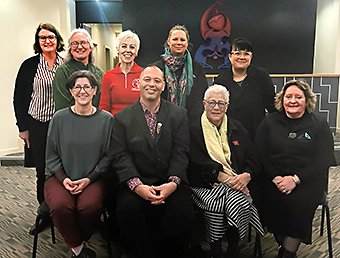
Group photo
L-R back row: Anne McLeod, Allied Health Te Whatu Ora, RuruHana Brownie, FASD-CAN Navigator, Stephanie James-Sadler, FASD-CAN CEO, Kath Allen-Ropiha, Patrice Tai’i (both Te Kupenga Haurora - TKH).
Front row L-R: Val White, Manager DCS Hawkes Bay, Nathan Harrington, CEO Te Kupenga Hauora – Ahuriri, Mihiterina Harrington, Kuia and Kaikaranga, Ruth Wheatley, Te Kupenga.