Fetal Alcohol Spectrum Disorder (FASD) is the globally accepted diagnostic term. Other historical terms such as Fetal Alcohol Syndrome (FAS), Partial FASD, Alcohol Related Neurodevelopmental Disorder (ARND) and Fetal Alcohol Effects (FAE) are no longer used except in some parts of the USA.
Other conditions can be mistaken for FASD and need to be considered in the differential diagnosis when there are signs, such as extremely low IQ. It's estimated that Attention Deficit Hyperactivity Disorder (ADHD) co-occurs in over 80% of cases of FASD and need to be diagnosed and treated separately.
Post-natal factors such as deprivation and trauma must be considered in the diagnostic formulation. These disadvantages can be alleviated through good care, while FASD remains lifelong and requires ongoing scaffolding and support.
An FASD diagnosis can be made where there is a history of confirmed alcohol exposure during pregnancy and the child has significant impairments in three or more different areas of brain function. These are evaluated by standardised testing of nine neurodevelopmental domains (sometimes referred to as brain domains) and ruling out other causes for the difficulties found, including genetic disorders.
Each domain is assessed with direct testing using standardised tests. An impairment in a domain is assigned generally when the individual scores below the third percentile for their age (i.e. below 97% of their same-age peers) but there is flexibility for the clinician to use their professional judgement.
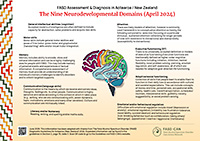 In the 2024 FASD Diagnostic Guidelines for Aotearoa NZ, the nine neurodevelopmental domains assessed during an FASD diagnosis are cognition (IQ), motor skills, memory, communication, academic function, executive function (reasoning and consequential thinking), adaptive function (daily living skills) and emotional regulation.
Click here to access this downloadable graphic flyer explaining the nine domains.

